

Aiken’s Immanuel School: A Landmark That Holds Community Memory
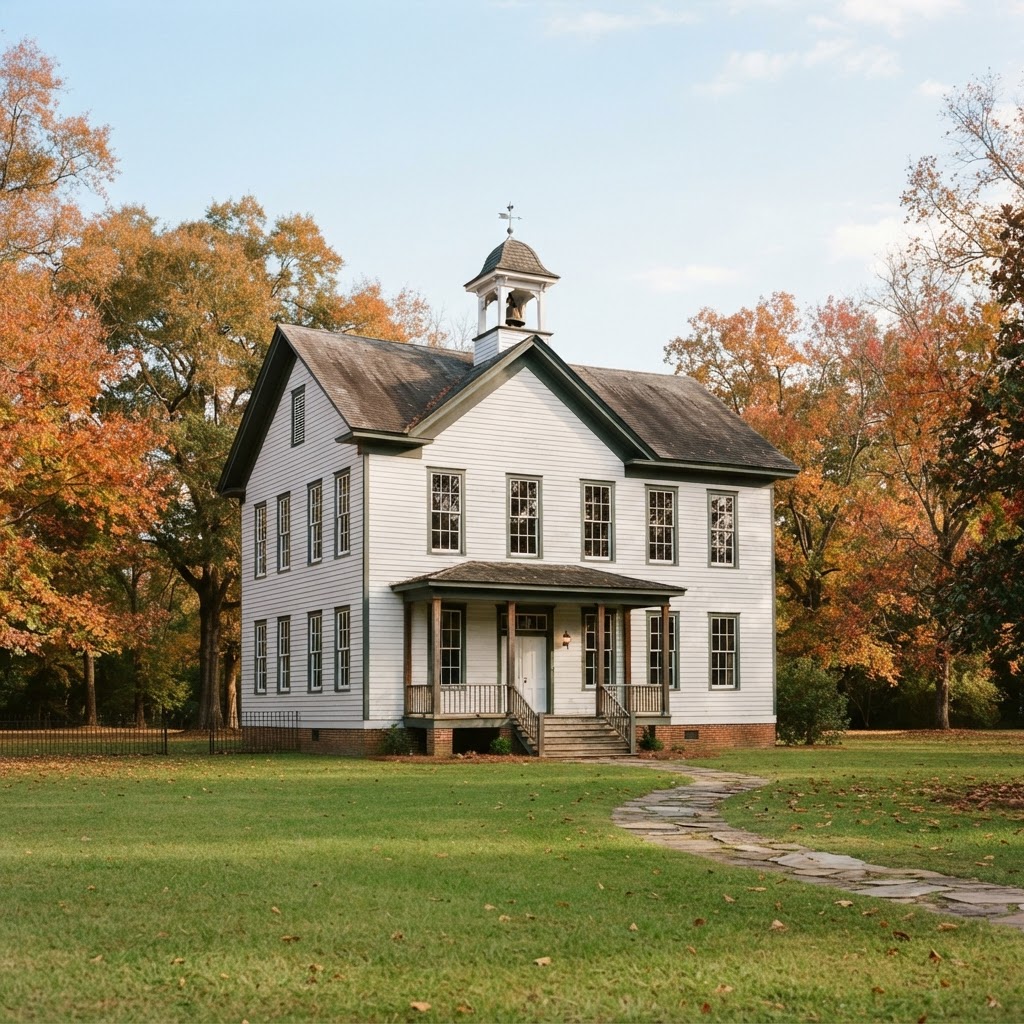
Some places tell their story before you even step inside. At 120 York Street Northeast, a white, two-story building with the proportions of a late-Victorian schoolhouse offers a quieter doorway into Aiken’s past. Known today as the Center for African American History, Art & Culture, the building was once Immanuel School, a place of learning for Black children from Aiken and nearby counties.
It is a meaningful stop for anyone who wants to understand the city beyond its familiar images of horse country, historic homes, and shaded streets. Here, the architecture and the institution’s story meet: one building carries both the evidence of an era and the memory of the people who made education possible within it.
A school built for learning and possibility
The National Park Service dates the school’s construction to 1889–1890 and notes that it served African American children in Aiken and surrounding South Carolina counties until 1932. That span covers decades when Black communities built and sustained educational institutions despite the severe limits and inequities of the post-Reconstruction South. Immanuel was more than a building with classrooms. It was part of the work of creating opportunity, preserving knowledge, and preparing young people for lives beyond the barriers of their time.
The structure itself is unusually intact. The National Park Service identifies it as a rare example of late-nineteenth-century Victorian vernacular school architecture built for African American students in the South. Its listing on the National Register of Historic Places in 2009 recognizes that significance, while the site’s inclusion in the Reconstruction Era National Historic Network connects local history to a broader national story.
When a landmark becomes a living center
Today, the Center for African American History, Art & Culture carries the school’s educational legacy forward in a new form. Its purpose is not simply to preserve an old structure, but to provide a place to share African American history, celebrate artistic expression, and make room for community conversation. The building’s past gives that mission a particular resonance: a former school remains a place where people can learn.
Exhibitions and programs can bring history into focus through photographs, art, objects, and personal stories. The City of Aiken has highlighted exhibitions that connect visitors with African American cultural expression and regional history. Before visiting, check the Center’s official listings for current exhibitions, public programs, and hours, since schedules can change. That small bit of planning makes it easier to arrive with time to look closely and take in what is on view.
A thoughtful way to spend part of a day
Give the visit a little breathing room. Read the interpretation, notice the building’s scale and details, and think about what it meant for children to come here to study across generations. If a program or exhibition is underway, let that shape the pace. This is not a stop that needs to be rushed into a checklist; its value is in the questions it opens and the connections it helps visitors make.
Afterward, continue exploring Aiken with a more attentive eye. The city’s character comes from many layers of history and many communities, not one postcard image. Learning about Immanuel School adds an essential layer to that picture and offers a reason to seek out more of the people, places, and institutions that have shaped the area.
Seeing Aiken with a deeper sense of place
For visitors, the Center is a reminder that local heritage is most vivid when it is connected to real lives and ongoing community work. For people who already call the CSRA home, it is an invitation to keep learning about the foundations beneath familiar streets. And for anyone considering a move, understanding a place means more than comparing houses; it means discovering the stories, institutions, and everyday rhythms that make a community feel like home.
If you’re considering a move to the CSRA, come spend time in Aiken and explore its neighborhoods, landmarks, and local stories for yourself. When you’re ready to talk through the move, visit MrListIt.com.